C
Charice
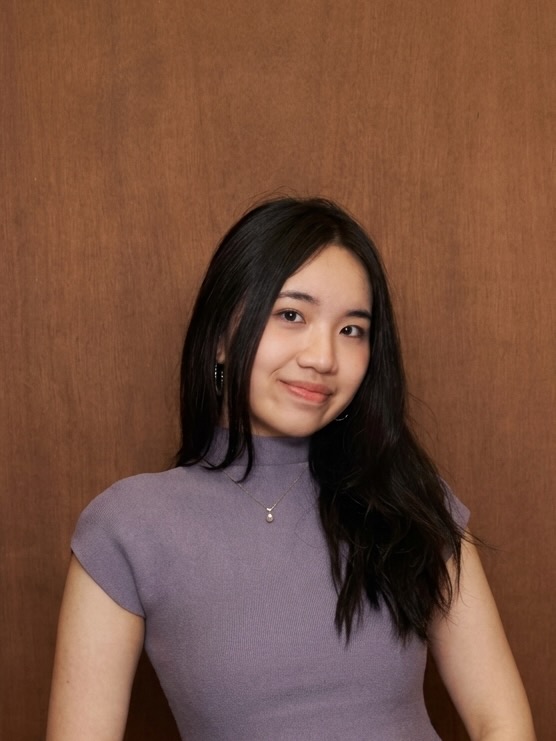
Charice Huang
"Every day should be more physically and intellectually stimulating than the last."
Claude Campus Ambassador Proposal

Natural intelligence, enhanced by Claude fluency.

Human skills — communication, systemic thinking, judgment — are what make someone good at using Claude, not technical AI skill. This page is the proposal, built the way I'd run the program: don't just claim it, demo it.

Why me

Who I am, at a glance

Self-taught
6th–12th grade, entirely self-taught using the internet. No teachers.
First-gen immigrant
If I can't bring my daydreams to fruition, who can?
Dancer
I choreograph and direct because I love moving with intention.
How I learned AI
Using free resources like Stanford's CS229 machine learning lectures!
Right now
Rising Senior @ NYU, graduating May 2027.
Core instinct
When something could scare me, I don't avoid it — I learn everything about it until the fear has nowhere left to hide.
The four pillars

My Life Philosophies Built Into Campus Programming

PILLAR 1
Human skill primacy
We can't teach prompt engineering. We need to teach communication and clear articulation.
PILLAR 2
Breadth fuels creativity
Creativity is only latent in someone who holds knowledge across domains and connects the dots themselves. I want to expose students to endless possibilities of cross-discipline knowledge.
PILLAR 3
Literacy over mystique
Demystifying how AI actually works — tokenizing, LLMs — is what reduces the reflexive, collective fear people get from taking claims at face value online.
Backed by research
  1. Tully, Longoni & Appel (2025), Journal of Consumer Research — lower AI literacy predicts more "magical thinking" and uncritical receptivity.
  2. Current Psychology (2025) — AI literacy reduces AI anxiety among college students.
  3. Cognitive Research: Principles and Implications (2025) — targeted literacy tips reduce belief in AI-generated misinformation.
  4. Pilot study, AI literacy workshop — measurably reduced adolescents' AI-related fears.
PILLAR 4
Access without cost
I taught myself with free internet resources. Knowledge should reach students at no extra monetary cost.
Quizzes I would deploy on campus

Try it yourself

AI Myths Quiz
Test your discernment skills. If it's absolutely horrible, I can help.
Prompt Fluency Quiz
Forget about prompt engineering. You might need a communication class.
How I'd run it

Event programming

AI fluency workshop
How to strengthen human skills and intelligence alongside AI use.
Learning Claude, setting by setting
Going through every setting and discussing what it's for — the skill being exercised is curiosity, fiddling with the tool the way a kid fiddles with a new toy.
Neuroplasticity + prompt engineering
Teaching the principles of neuroplasticity alongside prompt engineering — prompting well is a skill the brain rewires for with practice, same as any other human skill.
Beginner hackathon
Guided, theory-first — walk through the "why" before anyone touches a build. A direct answer to how build-first hackathons dominate campus programming right now.
Advanced hackathon
Less scaffolding, more open build time — for students who've already done the theory-first version.

Cadence: 2 events/month. Every event closes with a feedback-loop quiz — thought-provoking, not a satisfaction survey — used to refine the next one.

If we don't educate, students stay scared of the thing that's already shaping their future. I'd like 15 minutes of your time to change the future of AI education @ NYU and apply this fall.

charice.huang@nyu.edu